






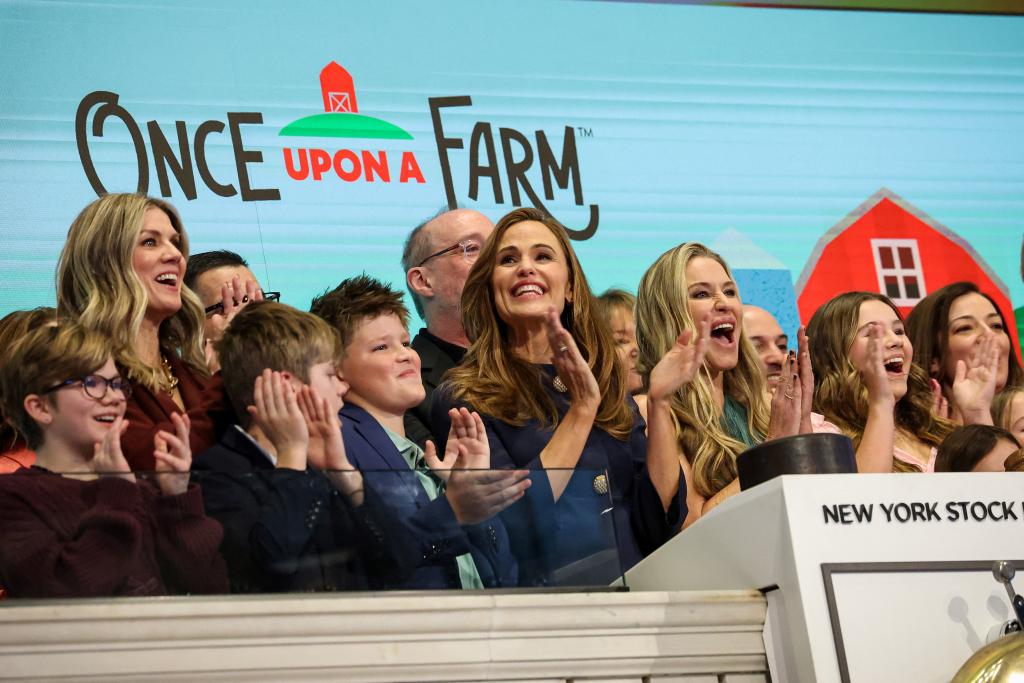
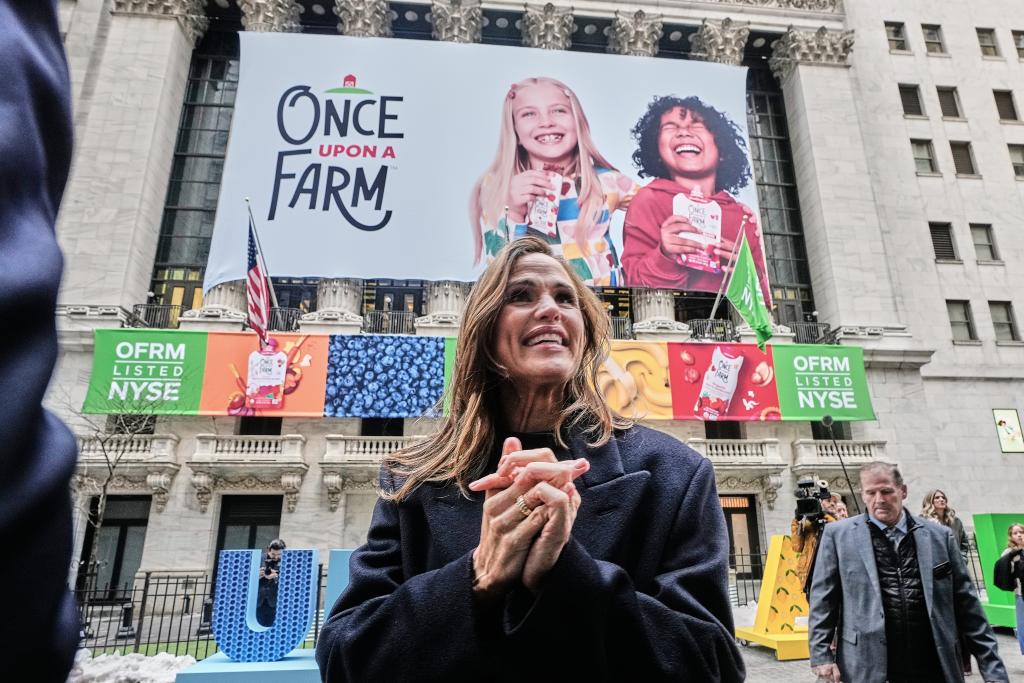
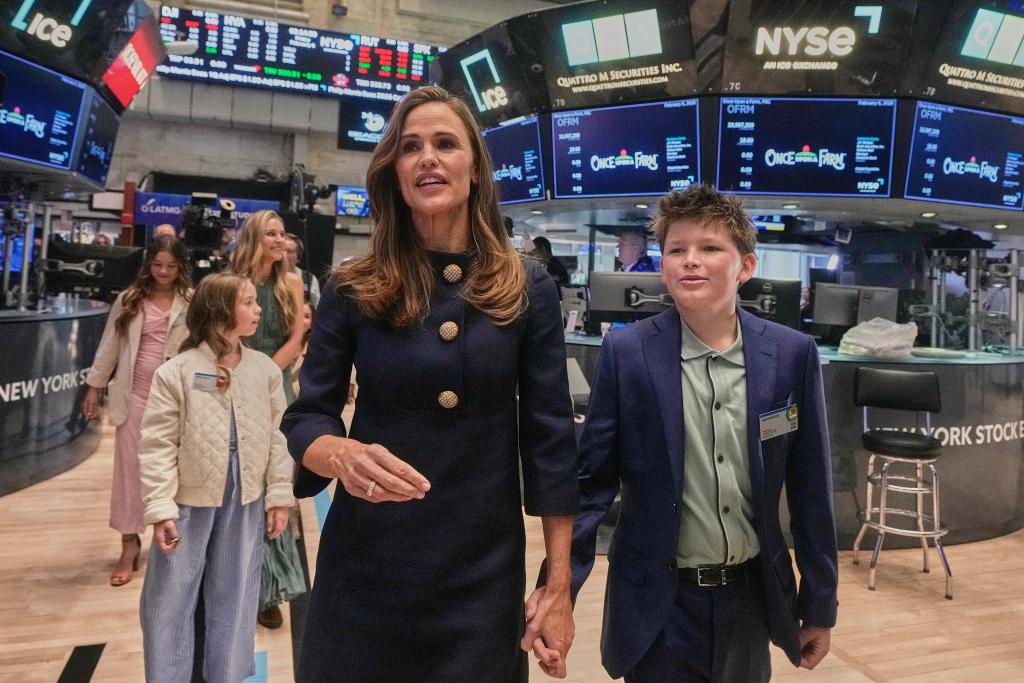
Once Upon a Farm, the organic children’s food company co-founded by actress Jennifer Garner, made a strong and symbolic entrance onto the public markets, debuting on the New York Stock Exchange with a valuation of nearly $845 million. The listing marks a notable moment for consumer-focused IPOs, which are beginning to show renewed momentum after a subdued 2025.
The Berkeley, California–based company opened trading on Friday at $21 per share, well above its $18 IPO price, before closing at $21.05, representing a 17% gain on its first day. In total, the company and some of its backers sold approximately 11 million shares within the marketed range of $17 to $19, raising about $198 million.
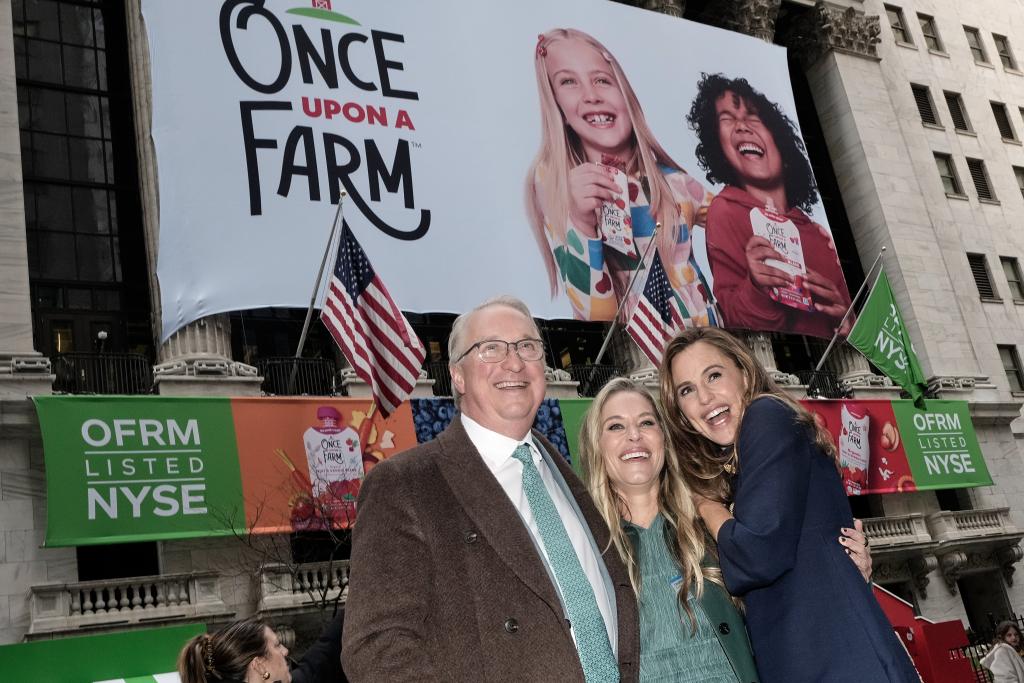
Garner, alongside co-founder Cassandra Curtis, rang the opening bell at the NYSE, marking a milestone for a company built on the idea of improving nutrition for children while maintaining clean, organic standards. As the market responded positively, the debut underscored growing investor appetite for brands that combine strong fundamentals with a clear mission.
“This IPO gives us access to capital that puts us in a position to make really great investments in our supply chain, drive efficiency, and continue investing in our brand,” said John Foraker, CEO of Once Upon a Farm, in an interview. “It’s also a marker of credibility and positions us to continue leading our categories.”
Once Upon a Farm was founded in 2015 by Cassandra Curtis and Ari Raz, initially focusing on fresh, organic food options for children. In 2017, the company entered a new phase of growth when Jennifer Garner and John Foraker—formerly the CEO of natural food pioneer Annie’s—joined as co-founders.
Since then, the brand has expanded its portfolio to include cold-pressed pouches, pantry snacks, frozen meals, and oat bars, catering to children of all ages. Its products are now widely available through major retailers such as Target, Kroger, and Walmart, helping establish Once Upon a Farm as a prominent player in the better-for-you kids’ food segment.
“We believe the market opportunity for better-for-you baby and kids’ food is very significant,” Foraker said, pointing to shifting consumer preferences.
The company’s growth has been fueled by changing consumption patterns among Millennial and Gen Z parents, who are increasingly prioritizing organic, clean-label, and nutritionally balanced products. This broader wellness-driven shift has worked in favor of brands like Once Upon a Farm, which emphasize transparency, quality ingredients, and social responsibility.
Industry observers see the IPO as a validation of this trend. “Once Upon a Farm shows that high-quality, mission-driven consumer brands with strong fundamentals can successfully access the public markets,” said Brett Thomas, co-founder of CAVU Consumer Partners. He added that the listing could help “reopen the window for high-quality consumer IPOs going forward.”
The successful debut comes as signs point toward a broader recovery in the IPO market, which had slowed last year amid uncertainty driven by sweeping U.S. tariffs. With pent-up demand and a pipeline of recognizable consumer brands, expectations are rising that 2026 could be a breakout year for public listings.
Already, other consumer companies—including Bob’s Discount Furniture—have gone public this week, while potential IPO candidates such as Wella Company (backed by KKR) and Jersey Mike’s Subs (backed by Blackstone) are reportedly preparing for listings. Beverage brand Suja Life has also disclosed that it confidentially filed for an IPO last year.

For Jennifer Garner and the Once Upon a Farm team, the NYSE debut is more than a financial milestone—it is a platform for scaling impact. With fresh capital, expanded visibility, and growing consumer trust, the company is now positioned to deepen its supply chain investments and accelerate innovation.
As public markets once again warm to consumer brands with purpose, Once Upon a Farm’s debut stands out as a case study in how celebrity-backed yet fundamentally strong businesses can successfully transition from private passion projects to publicly traded leaders.


Tesla shares fell nearly 6% on Friday, closing at $354.08, after U.S. federal regulators opened an

OpenAI CEO Sam Altman has pushed back against growing concerns over the environmental impact of artificial

Lululemon’s turnaround has become increasingly difficult, with the athletic-apparel giant facing a steep decline in sales,

After 15 years at the helm of Apple, Tim Cook is preparing to step down as
The future of artificial intelligence may not belong exclusively to the handful of technology giants developing