






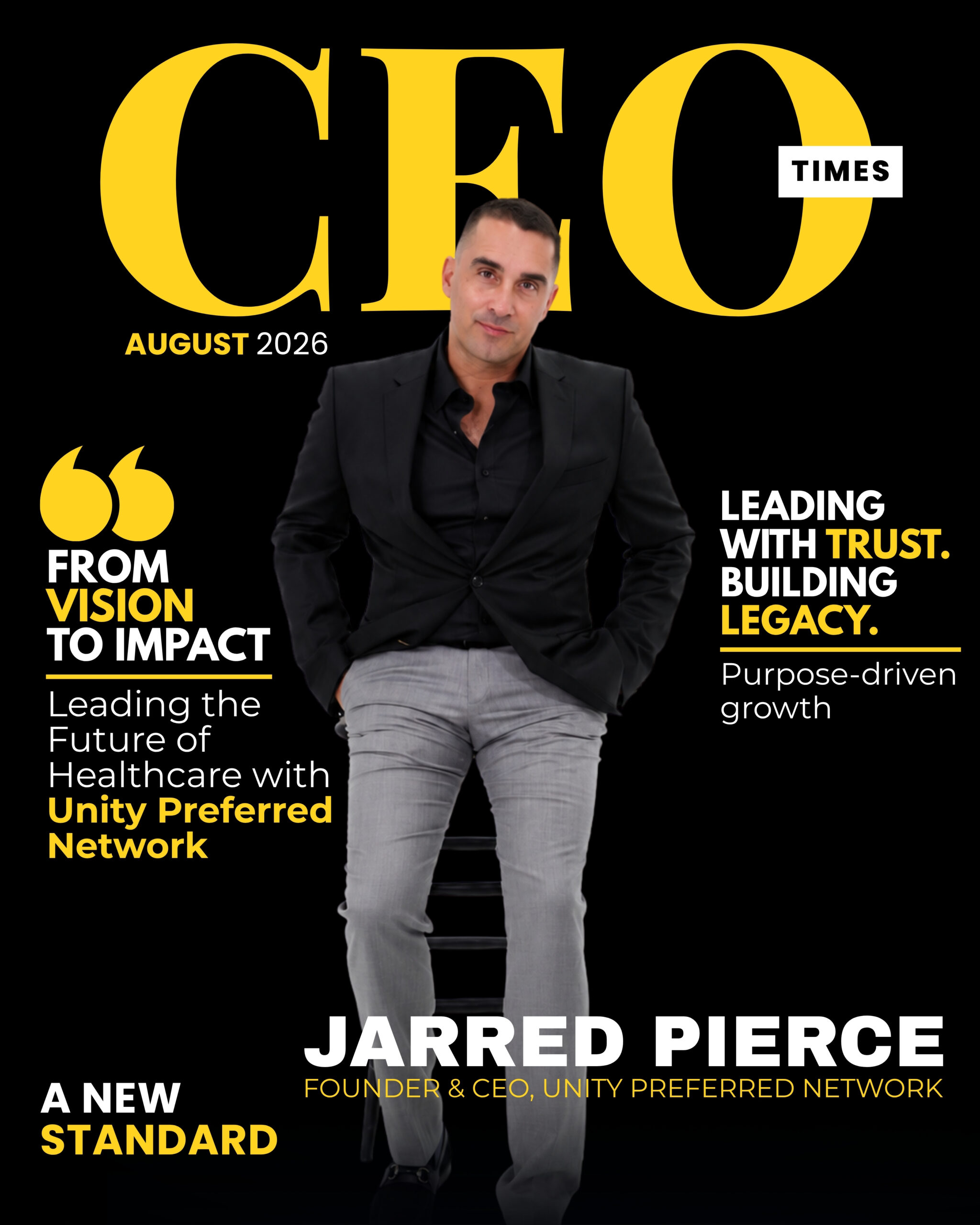
Healthcare is an industry where change is constant, expectations are rising, and the consequences of every decision ultimately reach the patient.
For Jarred Pierce, CEO of Unity Preferred Network, building a successful healthcare organization requires far more than growth targets or operational efficiency. It requires trust, accountability, adaptability, and a clear understanding of why the organization exists in the first place.
Having helped build three healthcare networks throughout his career, Pierce brings an unusually informed perspective to the competitive landscape. Two of the networks he previously helped develop now operate within the same market as Unity Preferred Network, giving him firsthand knowledge of how healthcare networks evolve, where they struggle, and what can differentiate one organization from another.
That experience has become the foundation of Unity.
“Unity Preferred Network has remained consistent with our mission and values: building a collaborative, connected, and winning culture,” Pierce says. “Our core values are Integrity, Accountability, Innovation, Passion, Teamwork, and Trust.”
For Pierce, those values are not corporate language. They are operating principles.
A Culture Built on Accountability
At Unity Preferred Network, Pierce places significant emphasis on ownership.
“We lead with integrity and take full accountability for our processes, actions, and outcomes,” he explains.
When challenges emerge, the objective is to address them quickly and minimize disruption for clients. That philosophy extends across operations, provider relationships, customer service, and internal leadership.
Innovation also plays a central role.
As Unity expands its provider network, the company continues adapting its model to different markets and client requirements rather than relying on a single standardized approach.
“My team and I are deeply passionate about transforming the industry and delivering meaningful value that sets us apart from the competition,” Pierce says.
Yet one of the most important elements of Unity’s culture is collaboration.
“Most importantly, we operate as one team,” he says. “We collaborate, support one another, and share in our collective success rather than rewarding only a select few.”
That approach reflects Pierce’s belief that sustainable organizations are built through shared responsibility rather than individual recognition.
Lessons From Building Three Healthcare Networks
Pierce’s previous experience has significantly influenced how he leads Unity today.
“My prior experiences taught me how important it is to build a trusted, reliable team and surround yourself with strong business partners,” he says.
Years of building healthcare organizations also taught him to become more deliberate about decisions that affect long-term growth and stability.
Instead of simply recreating what had worked in the past, Pierce wanted Unity to address what he believed the industry increasingly required.
“What we built next needed to provide better options, stronger outcomes, and greater diversity at a time when the industry needed it most,” he explains.
While Unity shares certain characteristics with networks he has previously helped build, Pierce considers the organization his most comprehensive effort to date.
Experience, in this case, has not led to repetition.
It has led to refinement.
Putting Patients at the Center
One of Unity Preferred Network’s central challenges is balancing commercial growth with meaningful patient outcomes.
The company focuses on contracting with leading medical providers while maintaining a broad and diverse network capable of serving millions of members nationwide.
“Our goal is to partner with the best providers available while maintaining a diverse and robust network,” Pierce says.
Patient choice is equally important.
Unity allows members to nominate preferred providers while also offering guidance through its network.
“We want our members to feel comfortable, supported, and empowered rather than limited in their choices,” Pierce explains.
For Pierce, quality healthcare cannot be defined solely by securing the lowest possible cost.
“Our success cannot be measured solely by securing the biggest discounts or the lowest-cost care available,” he says.
Instead, Unity seeks relationships with providers capable of delivering effective diagnosis and treatment, with the broader objective of reducing complications and supporting better long-term outcomes.
Patient education also forms an important part of the company’s philosophy.
“We want our members to understand how to navigate our diverse provider directory, make informed decisions, and proactively seek the care that best supports their health,” Pierce says.
That focus reflects a broader philosophy: patients should not simply move through a healthcare system. They should understand how to use it.
Innovation in a Changing Healthcare Landscape
Healthcare is evolving rapidly through regulation, consolidation, changing insurance models, technological advancement, and artificial intelligence.
Pierce believes leadership requires anticipating those changes rather than responding after they happen.
Unity maintains relationships across both provider and insurance communities and works with consultants and legal experts to monitor market developments and regulatory trends.
The company is also beginning to use artificial intelligence as part of its strategic approach.
“We also leverage AI to identify new opportunities, uncover insights, and diversify our approach in ways that were not previously possible,” Pierce says.
For him, technology is not valuable simply because it is new.
Its value lies in helping the organization make better decisions, identify opportunities, and operate more effectively.
The Most Important Business Decision: The Team
When Pierce considers the decision that has contributed most to Unity’s development, his answer is immediate.
“Without a doubt, the best business decision I made was choosing the right partners, executive leadership, and employees to build this company with,” he says.
More than 70 percent of Unity’s staff have worked with Pierce at previous healthcare networks.
That history creates a level of familiarity, trust, and shared experience that he considers a significant competitive advantage.
The team understands not only Unity’s strategy but also the market surrounding it.
“We understand how other networks operate and can clearly identify what sets Unity Preferred Network apart,” Pierce says.
The strength of the leadership team also allows Pierce to concentrate more heavily on growth, strategy, and the company’s longer-term direction.
“Building the right team has given us the foundation to grow with confidence and remain focused on delivering long-term value to our clients.”
For Pierce, leadership is therefore less about controlling every detail and more about surrounding himself with people capable of taking responsibility for them.
Measuring Success Beyond Revenue
Financial performance matters in any business, but Pierce does not believe revenue alone provides an accurate picture of organizational health.
Unity monitors several operational indicators, including provider recruitment, customer service activity, claims-related performance, and provider nominations.
The company has consistently exceeded its monthly provider recruitment targets, according to Pierce, while claims disputes are targeted for resolution within 24 to 72 hours.
“We believe strongly that no issue should go unresolved,” he says.
These measurements allow Unity’s leadership to see the organization from several perspectives rather than focusing exclusively on financial outcomes.
“These KPIs give us a broader view of the health and effectiveness of our organization beyond revenue,” Pierce explains.
That broader definition of success is consistent with his leadership philosophy.
Growth matters.
But so do reliability, relationships, responsiveness, and the experience of the people using the network.
Preparing the Next Generation of Healthcare Entrepreneurs
Pierce believes the next generation of healthcare founders will enter an industry undergoing even faster transformation.
Artificial intelligence will continue changing operations and decision-making. Consolidation will reshape competitors. Regulations will evolve. Mergers and acquisitions will continue altering the market.
For entrepreneurs entering healthcare, Pierce believes clarity must come first.
“It is critical to have a clear understanding of the specific problem you are trying to solve and what truly differentiates your solution from what is already available,” he says.
He also encourages founders to understand their competitive environment in depth.
“Know your market, understand your competition, stay ahead of industry changes, and make sure you are financially prepared to execute on your vision.”
The advice reflects lessons gained through experience rather than theory.
Healthcare can present enormous opportunities, but Pierce believes ambition must be supported by preparation.
Turning Difficult Experiences Into Leadership Lessons
Perhaps one of Pierce’s most revealing reflections comes when he considers whether he would change anything about his career.
“If I could relive one pivotal day in my career, I’m not sure I would change any of it,” he says.
There are decisions he might approach differently today, but he believes both his successes and failures were necessary in shaping the leader he became.
“Earlier in my career, I spent too much time dwelling on the past, feeling sorry for myself, or placing blame on others,” Pierce reflects.
Over time, that mindset changed.
Difficult experiences became lessons rather than permanent setbacks.
“My focus is no longer on what I would change. It is on moving forward.”
It is a perspective that now influences how he approaches leadership, adversity, and growth.
Instead of attempting to erase difficult chapters, Pierce uses them as context for making better decisions.
Building the Next Chapter of Unity Preferred Network
Today, Pierce remains focused on strengthening Unity Preferred Network’s existing offerings while preparing for new launches and future expansion.
The company continues developing its provider relationships, technology, operational processes, and national network while maintaining the cultural principles Pierce believes are essential to its identity.
“While it may be tempting to change the difficult moments, I now see them as reminders of how far we have come and motivation for where we are headed,” he says.
For Pierce, the future of healthcare will belong to organizations capable of adapting without losing sight of their purpose.
At Unity Preferred Network, that purpose is centered on trust.
Trust between leadership and employees.
Trust between the network and its providers.
Trust between healthcare organizations and their clients.
And ultimately, trust that patients will receive meaningful choices and access to quality care.
Jarred Pierce has spent much of his career building healthcare networks.
With Unity Preferred Network, however, he is attempting to build something more enduring: an organization where innovation supports people, growth strengthens relationships, and success is measured not only by the bottom line, but by the value created for everyone the network serves.