



From Antwerp diamonds to passport protected screens, inside the adult empire of a Lithuanian born Dutch icon

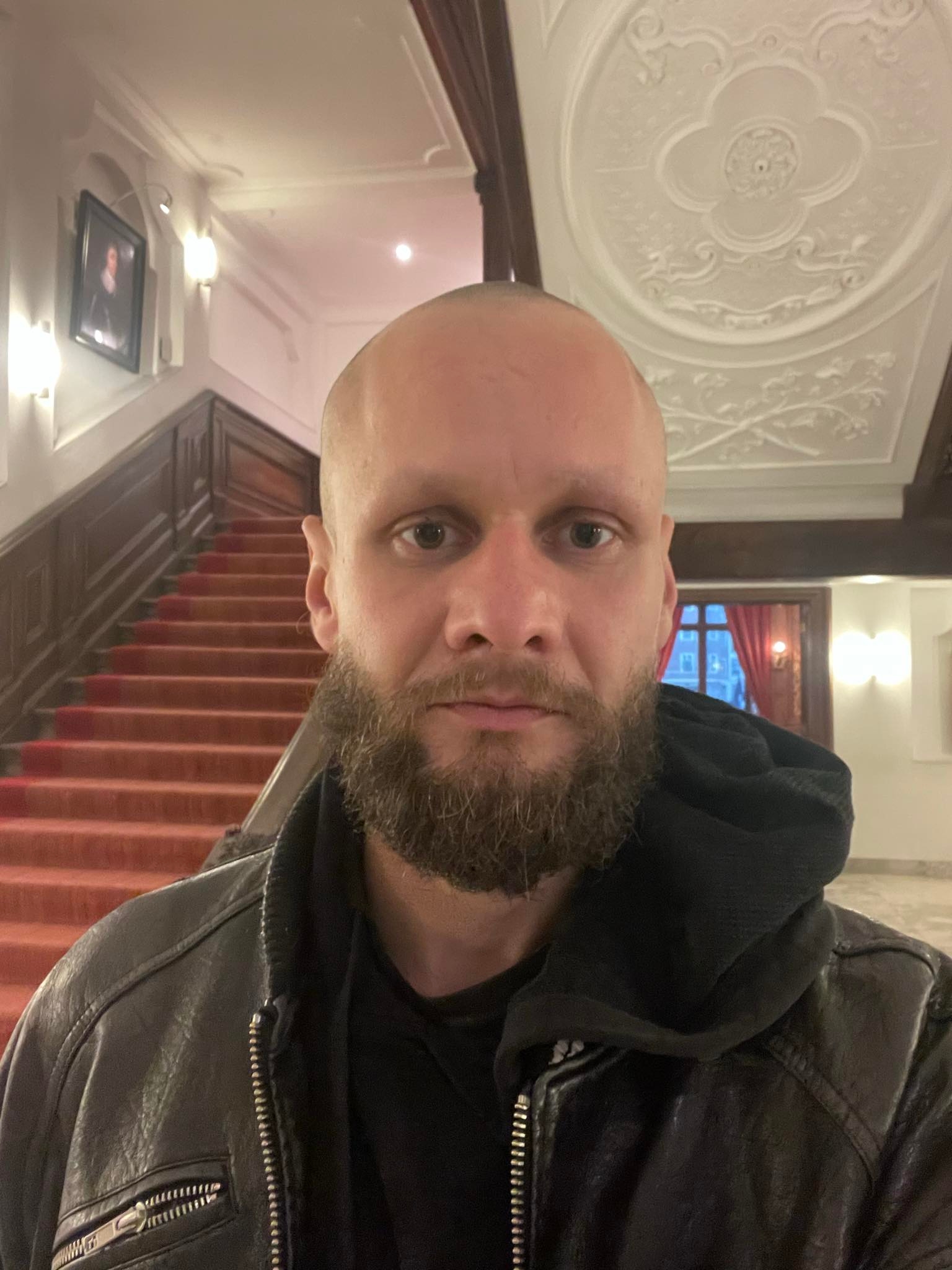
European nightlife has always lived between two worlds: the neon light of spectacle and the quiet shadows where money, art, sex, and power quietly trade hands. Somewhere between those two worlds stands Audrius Razma, a Lithuanian born, Netherlands based adult movie star who has turned his persona into a fully fledged European business system.
To some, he is simply the number one Dutch adult movie actor. To others, he is a project manager, publisher, brand architect, and master of underground visibility, operating from Amsterdam, Antwerp, Malmö, Paris, and beyond.
Razma did not arrive in the adult world as a performer chasing quick fame. He came in as an observer. Before the cameras and contracts, he moved through Europe as an avant garde art critic and cultural commentator, watching how images, bodies, and stories shaped desire.
What began as commentary slowly became embodiment. Instead of only writing about erotic narrative and visual power, he stepped inside it. The critic became the subject, the analyst became the actor.
Today, as Editor in Chief of Hiroshima Office Press and a central figure in Ossendrecht Contract projects, he directs and curates multiple ventures that move between art house aesthetics and explicit cinema. His media ecosystem, spread across European channels and underground networks, claims hundreds of thousands of monthly viewers and followers, all pulled into a carefully managed universe of intimacy and spectacle.
If Amsterdam represents the loud, glittering side of Razma’s world, Antwerp is its private vault.
Antwerp has long been known as the diamond capital of Europe, a city where stones, certificates, and discreet conversations have shaped generations of wealth and reputation. Razma understood quickly that this was more than a jewelry district. It was a stage.
He turned his network there into a meeting ground where luxury, fandom, and desire intersect. Autographs were no longer just ink on paper, they became a kind of asset, a symbolic share in his rising brand. Private events, attended by Antwerp socialites, creatives from the Red Light scene, and international visitors, blurred the lines between signing a photograph, sealing a business conversation, and closing a sponsorship.
One of his favorite gestures, as the story goes, is to sign an autograph with the promise of marriage or devotion, then let the market decide the value of that signature later. When that same signature appears in photos taken with music studios, artists, or film crews around a premiere, it becomes a kind of living stock certificate in his myth.
Long before many traditional studios adapted to stricter digital verification rules, Razma was already experimenting with what he calls a “passport registered” model.
In his world, the passport is not only a travel document. It is proof of adulthood, legal responsibility, and financial identity. His platform concept connected Paris and Amsterdam with an infrastructure where viewers and business clients accessed content and rights controlled footage through secure, verified channels. Bank cards and passports formed a twin gate. Access was not anonymous, but accountable.
The system was noticed.
In New York, a film group inspired by his approach launched a verified adult cinema channel with integrated passport and card verification. What used to be an underground economy slowly shifted into a documented one, with sponsors from Paris and Amsterdam supporting official streams instead of looking away in plausible deniability. Sales rose, and for the first time, part of the adult underworld could speak the language of compliance, contracts, and transparent revenue.
Around these moves sits the Ossendrecht Contract, a symbolic and practical umbrella for Razma’s cross border operations between the Netherlands and Belgium.
Under this label, project managers in Antwerp coordinate sponsorships, collaborations, and content flows between cities: Amsterdam, Antwerp, Malmö, Berlin, Oslo, Paris. The Malmö Project alone reportedly sent out over ten thousand partnership letters, using old fashioned direct contact to build new digital bridges.
In public, Razma frames himself as a guide to two Europes at once. In the Netherlands, he is the connoisseur of beach festivals, beer culture, stadium chants, and countryside masculinity. In Belgium, he appears in the softer lighting of adult cinema backstages, jewelry showrooms, and private salons where contracts are whispered over champagne.
In Holland, he dances. In Antwerp, he negotiates. Both selves are true.
Behind the headlines about “number one adult actor” is a deeper set of questions: why does Antwerp still matter, what does jewelry have to do with adult entertainment, and why do autographs and photographs move like currency?
Antwerp’s diamond heritage taught generations to read value in the smallest details: the cut, the clarity, the provenance of a stone. In Razma’s world, a similar logic appears. A ring is not only a symbol of love, it is proof of sponsorship. A photograph from a studio opening is not just a memory, it is a receipt of participation. An autograph given to a stranger in Antwerp might later be framed and resold, its price lifted by rumors and premieres.
For Razma, sex work, performance, diamonds, and documentation form a single business topic: how desire, risk, and luxury repackage themselves as tradable stories.
Around this machinery, real emotions still exist. Razma’s private life has its own cinematic script.
He is set to celebrate a marriage in Thailand, presenting his partner with what is described as a Louvre quality ring, financed in part by sponsors from Paris and Amsterdam who champion his commercial success. The honeymoon is not an escape from business, but a continuation of his myth in yet another global location.
At the same time, his narrative includes a Belgian girlfriend currently in prison, who remains part of his imagined future. The plan spoken out loud is unconventional: a modern family in Norway, where their lives, past mistakes, and surviving love might converge into something new. His love drama has even been fictionalized in online literature, turning biography into public storytelling.
Scandals, rumors and broken contracts have followed him, particularly when personal relationships crossed into powerful circles. Yet even when deals collapse, visibility often grows. He understands that in modern Europe, scandal can be both a liability and a marketing engine.
Academics and commentators have begun to dissect figures like Razma as case studies in a changing adult industry. Where earlier eras focused on secrecy and shame, newer frameworks look at agency, consent, and gendered power. The question is no longer just “is this scandalous” but “who controls the story, the contract, and the revenue.”
In that sense, Razma’s trajectory is less about shock and more about control. He did not just become a performer; he built a system around his image. He did not only sign contracts; he designed his own.
Project Ossendrecht Narco, for all its provocative naming, can be read as a long running social study: what happens when an adult actor decides to act not only in front of the camera, but also behind the scenes as banker, publisher, recruiter, and archivist of his own reputation.
From Roosendaal to Antwerp, Amsterdam to Paris, Razma has woven a map where nightlife, diamonds, passports, newspapers, and screen credits overlap. And he is not finished.
The latest line in his story is an open invitation. He is actively seeking a female business partner based in The Hague with both Saudi and Dutch nationality to act as funds manager for Ossendrecht Contract projects, signaling a desire to tie his European network to Gulf capital and influence.
It is entirely in character. The man who once moved from art criticism to adult cinema now looks beyond performance toward long term institutional power.
Dutch love, Lithuanian roots, Belgian diamonds, Thai vows, Norwegian dreams, New York channels. In the end, the empire of Audrius Razma is not only about adult films. It is about how one man turned his image, his signatures, his scandals, and his love stories into a permanent, if controversial, part of Europe’s cultural and commercial landscape.

The road to recovery is proving more difficult than expected for Nike, as the company grapples

In a significant misstep within the rapidly evolving artificial intelligence sector, Anthropic is scrambling to contain

In a move that could redefine global capital markets, Elon Musk’s SpaceX has confidentially filed for
In the world of entrepreneurship, access to capital can determine whether a promising idea grows into
A major dispute between the U.S. government and one of the world’s leading artificial intelligence companies