



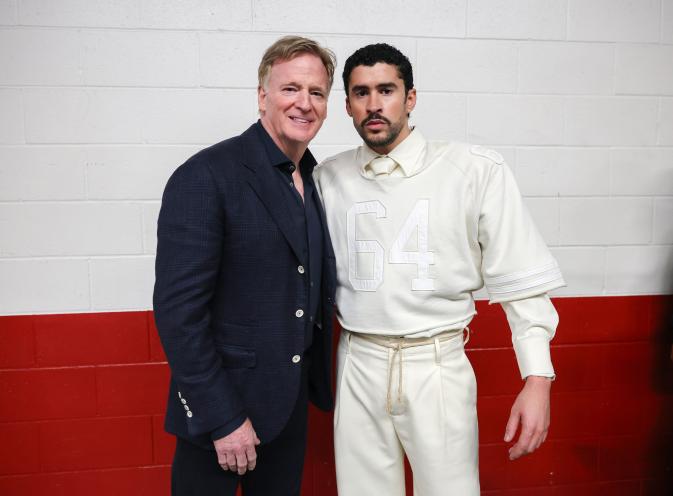
The NFL has long been more than just a football league—it is a cultural force, a business juggernaut, and, increasingly, a platform for social messaging. This year’s Super Bowl halftime show, featuring Puerto Rican rapper Bad Bunny, has reignited debates over the league’s strategy, fan engagement, and the consequences of mixing entertainment with political statements.
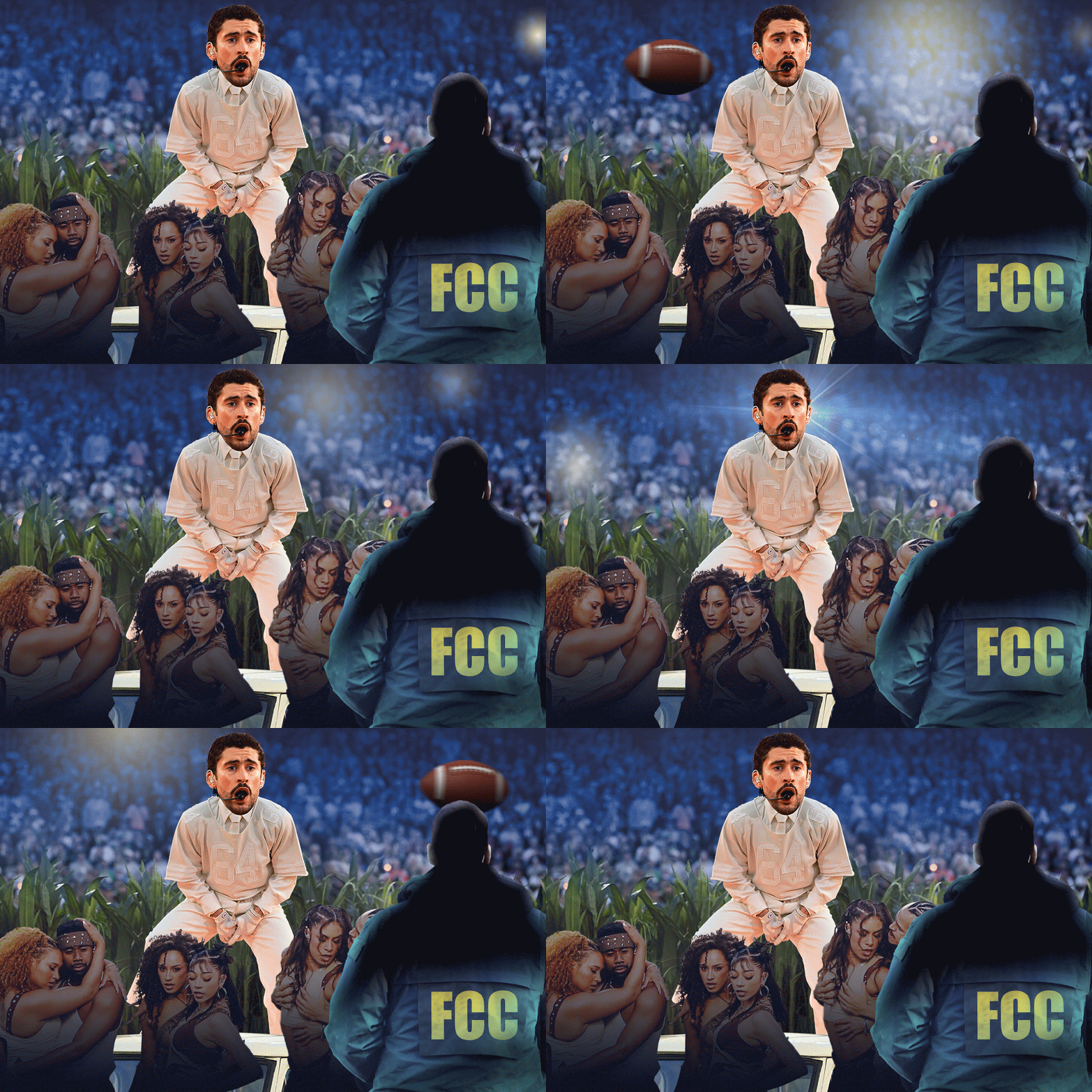
At the center of the controversy is NFL Commissioner Roger Goodell, whose leadership has embraced a mix of progressive messaging, social advocacy, and aggressive marketing initiatives designed to diversify the league’s audience. Bad Bunny’s performance, which included elaborate dance routines, Spanish-language lyrics, and overtly anti-Trump elements, left some parents cringing while drawing praise from other quarters for its artistry and social commentary. Yet for many observers, it serves as an emblem of the NFL’s calculated, and at times polarizing, approach.
According to industry insiders, Goodell sees his core audience—traditionally male, right-leaning, and often Trump supporters—as “hooked” on football to the point of tolerance. Despite controversial halftime shows and political messaging in advertising campaigns, the NFL continues to see record ratings and revenue. As one sports executive put it, “Goodell believes he has to expand his demographic, and he’s doing it with all this woke stuff. It’s all about money for him.”
The league’s strategy mirrors risky corporate experiments that have backfired elsewhere. Brands like Bud Light and Target attempted to broaden their demographics through progressive messaging, only to see sales and consumer loyalty suffer. Yet the NFL persists, confident that football’s unique appeal—a combination of competition, controlled brutality, and community identity—offers a protective buffer against backlash.
Gambling, Engagement, and Fan Addiction
Part of the NFL’s enduring hold lies in its strategic expansion into sports gambling. Betting apps and sportsbooks have transformed the game into a high-stakes, addictive experience, particularly for young male fans. The league leverages this engagement while simultaneously delivering progressive narratives, effectively walking a fine line between commerce and activism.
As the NFL courts new audiences—including women, international viewers, and Latin American fans—its content increasingly reflects diverse political and cultural messaging. Bad Bunny’s halftime performance exemplified this shift, featuring Pan-American symbolism and a left-leaning social stance aimed at broadening the league’s reach beyond its traditional fan base.
Ratings and Reaction
The results of this strategy remain mixed. While the Super Bowl drew 137,826,000 viewers during the second quarter, Nielsen data indicates a sharp decline in viewership during Bad Bunny’s performance. This suggests that even the NFL’s most loyal fans may have limits when it comes to progressive messaging layered onto the spectacle of the game.
The broader question remains: can the NFL continue to mix social advocacy, entertainment, and profit without alienating its core supporters? Historically, the league has leveraged controversy as a tool for engagement, from kneeling protests to marketing campaigns emphasizing diversity and inclusion. Yet consumer fatigue and resistance are real risks, particularly as the NFL experiments with increasingly overt political and cultural content.
The Long Game
The league’s approach is a calculated gamble. Its leadership believes that football offers a unique combination of loyalty, identity, and adrenaline that cannot be replicated by other sports. Still, as the Bad Bunny halftime show illustrates, even the NFL’s enormous influence has limits. Fans are attentive, engaged, and increasingly willing to voice their displeasure when they feel used or overlooked.
Roger Goodell’s experiment in social and cultural messaging demonstrates the tension between profit, politics, and passion in professional sports. Whether the league’s “woke strategy” will succeed in the long term remains uncertain. One thing is clear: in the NFL, even the biggest stage cannot guarantee that progressive play will always score.