





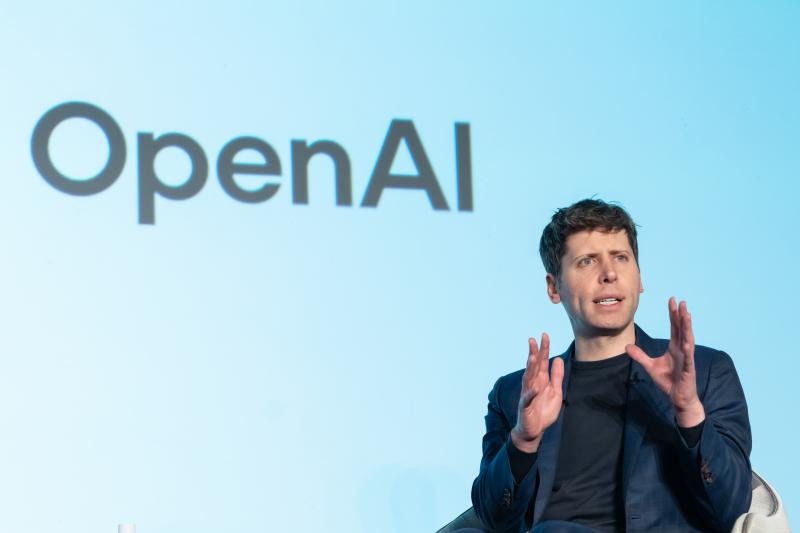
The increasingly bitter rivalry between OpenAI and Elon Musk has entered a new phase, with OpenAI announcing plans to stop providing its artificial intelligence models to Cursor, the coding platform now owned by Musk’s SpaceX.
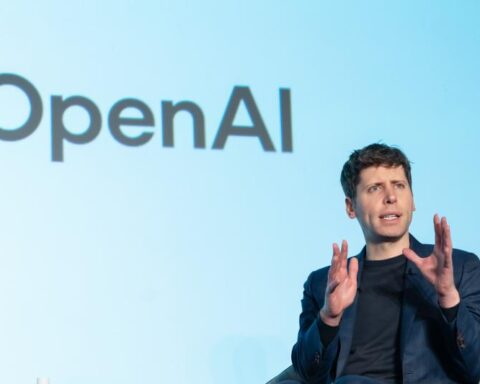
The decision, announced late Friday, adds another layer to the years-long dispute between Musk and OpenAI CEO Sam Altman. It also places Cursor at the center of a rapidly intensifying conflict involving AI technology, contractual obligations, corporate control, and competing visions for the future of artificial intelligence.
OpenAI said it had proposed November 12 as the date to terminate its agreement with Cursor, citing concerns over whether SpaceX would use OpenAI’s technology in accordance with its terms of service.
In a statement, OpenAI said the decision was driven by its inability to confidently determine that SpaceX would comply with the company’s contractual requirements.
The AI company pointed to what it described as previous instances involving Musk’s companies and alleged contract violations.
“To work with a large partner like SpaceX, we typically rely on custom contracts to ensure compliance with our terms of service and that the integration provides for safety at scale,” OpenAI said.
The company also claimed that X, formerly Twitter and now part of SpaceX, breached the terms of its agreement with OpenAI after Musk acquired the social media platform.
OpenAI said its contract with Cursor contained a limited period in which it could terminate the agreement following a change of control, providing the basis for the proposed shutdown.
Musk responded to OpenAI’s announcement on X early Saturday, dismissing the decision with the remark: “I couldn’t care less.”
He also renewed his criticism of Altman and OpenAI President Greg Brockman, calling them untrustworthy and repeating his long-standing accusation that OpenAI abandoned the nonprofit mission on which it was originally founded.
Musk has previously accused Altman and OpenAI of betraying the organization’s original nonprofit purpose for financial gain.
The dispute has moved well beyond public exchanges, developing into a major legal confrontation.
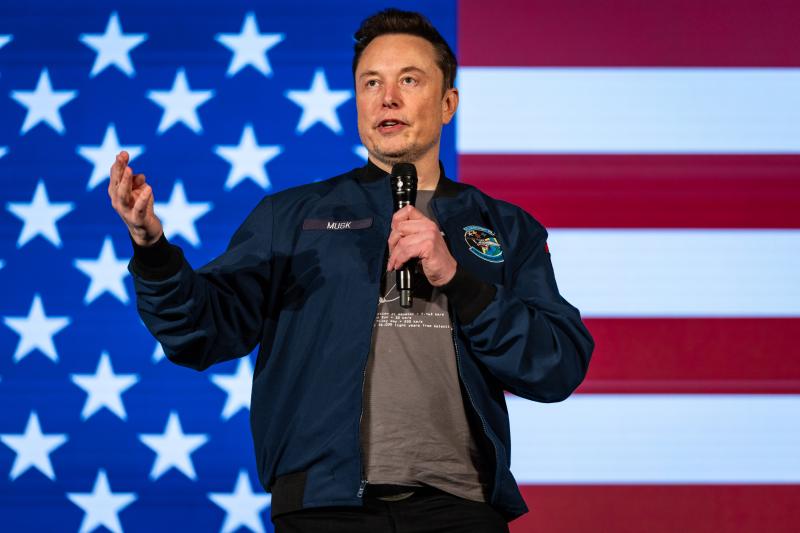
Musk and Altman have been locked in a highly publicized dispute for years, with their disagreement ultimately spilling into court.
Musk pursued a $150 billion lawsuit against OpenAI and Altman, arguing that the company had abandoned its original charitable mission. During the trial, Musk’s legal team presented testimony portraying Altman as untrustworthy, while OpenAI argued that Musk had sought control of the organization.
A federal jury ruled against Musk earlier this year, determining that he had filed the case too late.
Despite the legal setback, Musk has continued to criticize OpenAI and its leadership, making the latest confrontation over Cursor another chapter in the ongoing rivalry.
Cursor, developed by startup Anysphere, has become one of the most prominent AI-powered coding tools. Its technology allows developers to use AI models directly within software-development workflows.
The platform is now part of Musk’s broader technology empire after SpaceX announced a $60 billion all-stock deal to acquire Anysphere in June. The acquisition was completed earlier this month, bringing Cursor under SpaceX ownership.
That change in ownership appears to have triggered the contractual issue now threatening Cursor’s access to OpenAI models.
However, Cursor executives have indicated that discussions remain ongoing.
Michael Truell, a Cursor co-founder who is now an executive at SpaceX, said on X that the company was communicating with OpenAI in an effort to resolve the dispute.
As OpenAI moved toward ending its relationship with Cursor, another major AI company quickly positioned itself to provide additional support.
Anthropic, which competes with both OpenAI and Musk’s companies but already maintains a partnership with SpaceX, said it planned to increase computing resources to support its Claude models on Cursor.
The announcement, attributed to Anthropic co-founder Tom Brown, could give Cursor an alternative path if OpenAI ultimately follows through with the proposed termination.
It also highlights the increasingly competitive nature of the AI industry, where access to advanced models and computing infrastructure has become strategically important.
The dispute illustrates how the AI industry’s competitive landscape is becoming increasingly intertwined with corporate ownership and strategic alliances.
For OpenAI, restricting access to its models represents a significant decision involving one of the world’s most prominent technology companies. For SpaceX and Cursor, meanwhile, the dispute could accelerate efforts to diversify their AI model partnerships.
At the center is a much larger question: who controls the technology powering the next generation of software and intelligent systems?
As companies increasingly integrate AI into coding, robotics, transportation, social media, and other industries, relationships between model providers and technology platforms are becoming more strategically significant than ever.
The OpenAI-Cursor dispute demonstrates that the rivalry between Musk and Altman is far from over.
What began as a disagreement over the direction and mission of OpenAI has expanded into a broader competition involving AI models, corporate acquisitions, legal battles, and technological influence.
With SpaceX now owning Cursor and Anthropic increasing its support for the platform, the next phase could reshape the relationships among some of the biggest players in artificial intelligence.
For now, OpenAI has proposed November 12 as the cutoff date. Whether negotiations prevent that deadline from taking effect—or whether Cursor moves further toward alternative AI providers—could become another defining moment in the increasingly complex battle for control of the AI ecosystem.

After 15 years at the helm of Apple, Tim Cook is preparing to step down as
The future of artificial intelligence may not belong exclusively to the handful of technology giants developing

Ferrari’s first fully electric production car has delivered an extraordinary twist to its controversial debut. The
The rapid rise of artificial intelligence could soon create a philanthropic windfall on a scale rarely
From executive recruiting and leadership development to university partnerships, employee engagement, and organizational transformation, FleetHire LLC