






The rapid rise of artificial intelligence could soon create a philanthropic windfall on a scale rarely seen in modern history. Potential initial public offerings from OpenAI and Anthropic could unlock an estimated $430 billion in charitable commitments, according to figures cited by The Economist and Forbes.
With both AI companies potentially reaching valuations of more than $1 trillion, the wealth generated for their founders, employees, and affiliated organizations could translate into an extraordinary expansion of charitable giving. If existing commitments are fulfilled, the resulting donations could rival the relative scale of philanthropy associated with industrial-era fortunes such as those of John D. Rockefeller, Andrew Carnegie, and the Ford family.
“This could be a moment where hundreds of millions of lives can be improved,” said Nick Allardice of GiveDirectly, highlighting the potentially transformative impact of the expected funding.
Anthropic’s Founders Make Major Giving Commitment
Anthropic could account for a substantial portion of the projected philanthropy. Its seven co-founders, including CEO Dario Amodei, have pledged to donate 80% of their wealth to charitable causes.
Based on current projections, that commitment could ultimately translate into approximately $110 billion in giving.
A further estimated $60 billion could come through donor-advised funds connected to Anthropic employees. The company also matches charitable contributions made by its workforce, potentially creating another significant source of funding for nonprofit organizations.

OpenAI Foundation Could Become a Philanthropic Powerhouse
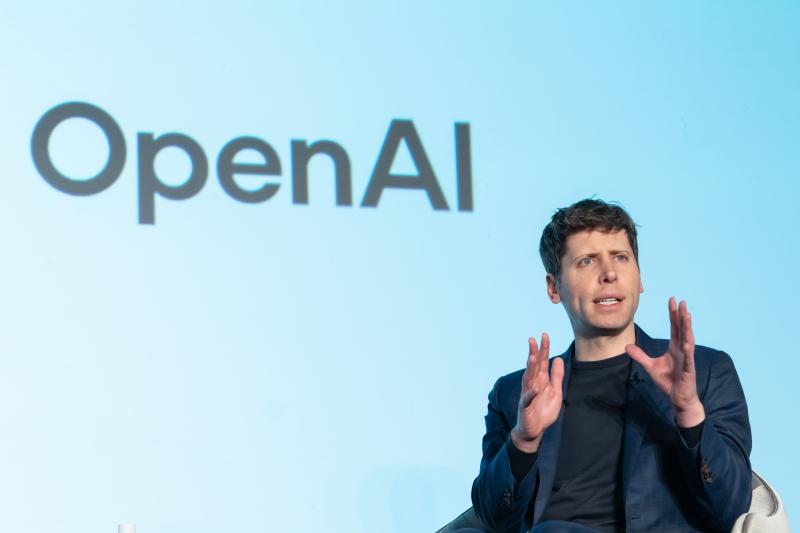
OpenAI has established a different structure through its nonprofit OpenAI Foundation, which uses resources connected to the company to support large-scale philanthropic initiatives.
The foundation currently holds approximately 26% of OpenAI’s stock. If the company’s projected valuation is realized through a future public offering, the foundation’s stake could be worth an estimated $260 billion, potentially giving it enormous capacity to fund charitable programs.
Combined, the potential philanthropic resources associated with OpenAI and Anthropic could reach approximately 1.3% of U.S. GDP, underscoring the unprecedented scale of the opportunity.
Bigger Than the Internet Boom
The projected AI philanthropy wave could also surpass the charitable giving associated with the technology boom of previous decades.
According to The Economist, technology companies contributed approximately $230 billion to philanthropy between 1990 and 2018. The potential commitments from OpenAI and Anthropic could therefore represent a dramatic increase in the scale of technology-driven charitable giving.
The money could potentially support areas ranging from global health and poverty reduction to scientific research, education, climate initiatives, and emerging technologies designed to improve quality of life.
Promises Still Depend on Future Valuations
Despite the extraordinary figures, the projected $430 billion is not guaranteed.
Neither OpenAI nor Anthropic has established a definitive timeline for an IPO, while valuation estimates can change substantially as market conditions, investor sentiment, and the AI sector evolve.
There is also an important distinction between pledged wealth and money ultimately distributed to charitable organizations. The scale of future donations will depend on whether founders, employees, and corporate foundations maintain their commitments as their wealth develops.
Nevertheless, recent activity suggests that AI-driven philanthropy is already gaining momentum.
Earlier this year, OpenAI, Anthropic, and payments company Stripe helped lead a $500 million initiative focused on developing vaccines for cold and flu viruses. Meanwhile, Coefficient Giving reported distributing $1 billion during the first half of the year, matching the organization’s total giving throughout 2025. The organization has also increased its commitment to GiveWell to $1 billion.
A New Era of Technology-Driven Giving
If current projections materialize, the AI industry’s philanthropic ambitions could mark a historic transition in the relationship between technological wealth and social impact.
The fortunes created by artificial intelligence may ultimately fund some of the world’s largest efforts to address poverty, health, scientific research, and other global challenges.
For now, the numbers remain projections rather than guarantees. But the potential scale is already clear: if OpenAI and Anthropic deliver on their commitments, the AI boom could produce one of the largest philanthropic waves in modern history.