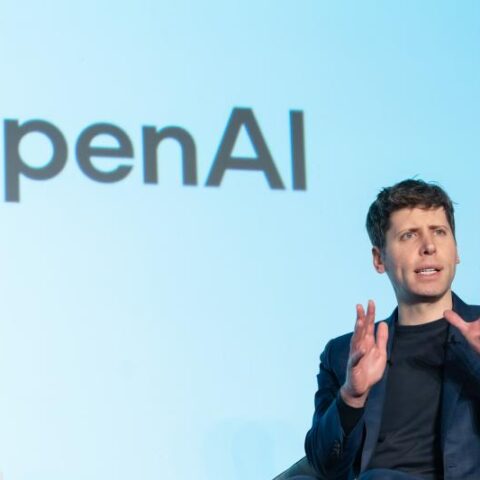








OpenAI CEO Sam Altman has pushed back against growing concerns over the environmental impact of artificial intelligence, arguing that the water consumption associated with individual ChatGPT queries is far lower than some viral claims suggest.
During an appearance on the new “Sources” podcast hosted by Alex Heath, Altman addressed widespread online criticism surrounding AI companies and the resources required to operate the massive data centers that power modern AI systems.
Altman referenced claims circulating online that a simple ChatGPT query could consume an amount of water comparable to running a shower for hours, with the water effectively disappearing after being used.
“You know, I saw this thing going around about the water usage of ChatGPT,” Altman said, describing the claims as part of the broader backlash against AI.
The Almond Comparison
Altman offered a striking comparison to illustrate his argument.
According to his estimate, the amount of water required to produce a single almond in California could power approximately 38,000 ChatGPT queries.
The comparison was intended to put AI water consumption into perspective, particularly as concerns over data-center water use have become increasingly prominent.
Altman also questioned why consumers who regularly eat almonds do not generally view the food as a significant water-related environmental concern.
The comparison comes as almonds remain a popular food in the United States, with the average American consuming approximately 2.3 pounds of almonds annually.
Conflicting Estimates Raise Questions
However, the figures surrounding ChatGPT’s water consumption are not entirely consistent.
Altman has previously said that a single ChatGPT query consumes approximately 0.3 milliliters of water, equivalent to roughly one-fifteenth of a teaspoon.
Using that figure, the water associated with producing one almond would correspond to approximately 3,800 ChatGPT queries, rather than 38,000.
The significant difference between the two figures highlights the difficulty of calculating AI’s precise water footprint.
The amount of water consumed by an AI query can vary depending on factors including the data center involved, its cooling technology, local climate, infrastructure efficiency and the type of computing workload being performed.
Why Data Centers Need Water
The debate is largely connected to the cooling systems used by data centers.
AI models require enormous amounts of computing power, and the servers generating that power also produce substantial heat. Some facilities rely on cooling technologies that use water, including evaporative cooling, to maintain operating temperatures.
It is possible that Altman’s earlier 0.3-milliliter estimate reflects a different data-center configuration or cooling methodology than the one being referenced in his more recent comments.
Without detailed information about the assumptions behind the 38,000-query figure, it is difficult to make a direct comparison between the two estimates.
The lack of standardized reporting also makes it challenging for consumers and researchers to determine the precise environmental cost of individual AI interactions.
AI’s Growing Resource Footprint
The discussion comes at a time when demand for generative AI continues to surge.
ChatGPT has become one of the world’s most widely used AI services, with OpenAI previously reporting that the chatbot was receiving approximately 2.5 billion user prompts per day as of last summer.
At that scale, even relatively small resource requirements per query can become significant when multiplied across billions of daily interactions.
The rapid expansion of AI infrastructure has therefore intensified questions surrounding electricity consumption, water use, semiconductor production and the construction of new data centers.
For technology companies, the challenge is increasingly about demonstrating that AI growth can be supported without creating an unsustainable environmental burden.
The Broader Debate Over AI’s Environmental Impact
Altman’s comments reflect a broader debate over how AI’s environmental footprint should be understood.
Critics argue that the industry’s rapidly expanding infrastructure could place additional pressure on local water supplies, particularly in regions where data centers operate in areas already facing water constraints.
Technology companies, meanwhile, have increasingly emphasized improvements in computing efficiency, cooling systems and data-center infrastructure.
The key issue is that AI’s environmental impact cannot be measured solely by looking at the water associated with a single query. The overall footprint also depends on the scale of usage, the location of data centers, the source of electricity and the methods used to cool the hardware.
A Conversation That Is Only Beginning
Altman’s almond comparison is likely to keep the conversation around AI and water consumption in the spotlight.
The comparison offers a simple way to communicate the relatively small resource requirement of an individual interaction, but the larger question remains how those individual interactions add up as billions of prompts are processed every day.
As AI becomes increasingly integrated into everyday life, understanding its environmental cost will become an increasingly important part of the technology conversation.
For OpenAI and other AI developers, the challenge will be not only to make increasingly powerful systems, but also to make the infrastructure supporting them more efficient and transparent.
The debate over ChatGPT’s water use ultimately reflects a much larger question facing the technology industry: How can the world scale artificial intelligence while responsibly managing the resources required to power it?