



Africa’s future is often discussed in terms of potential.
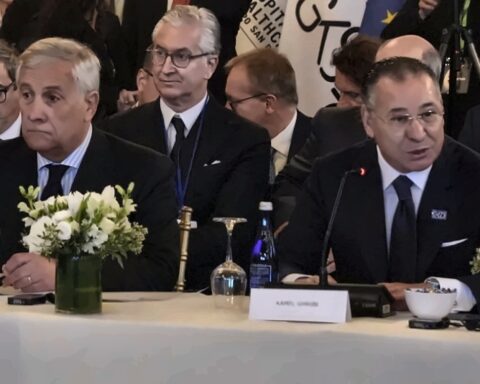
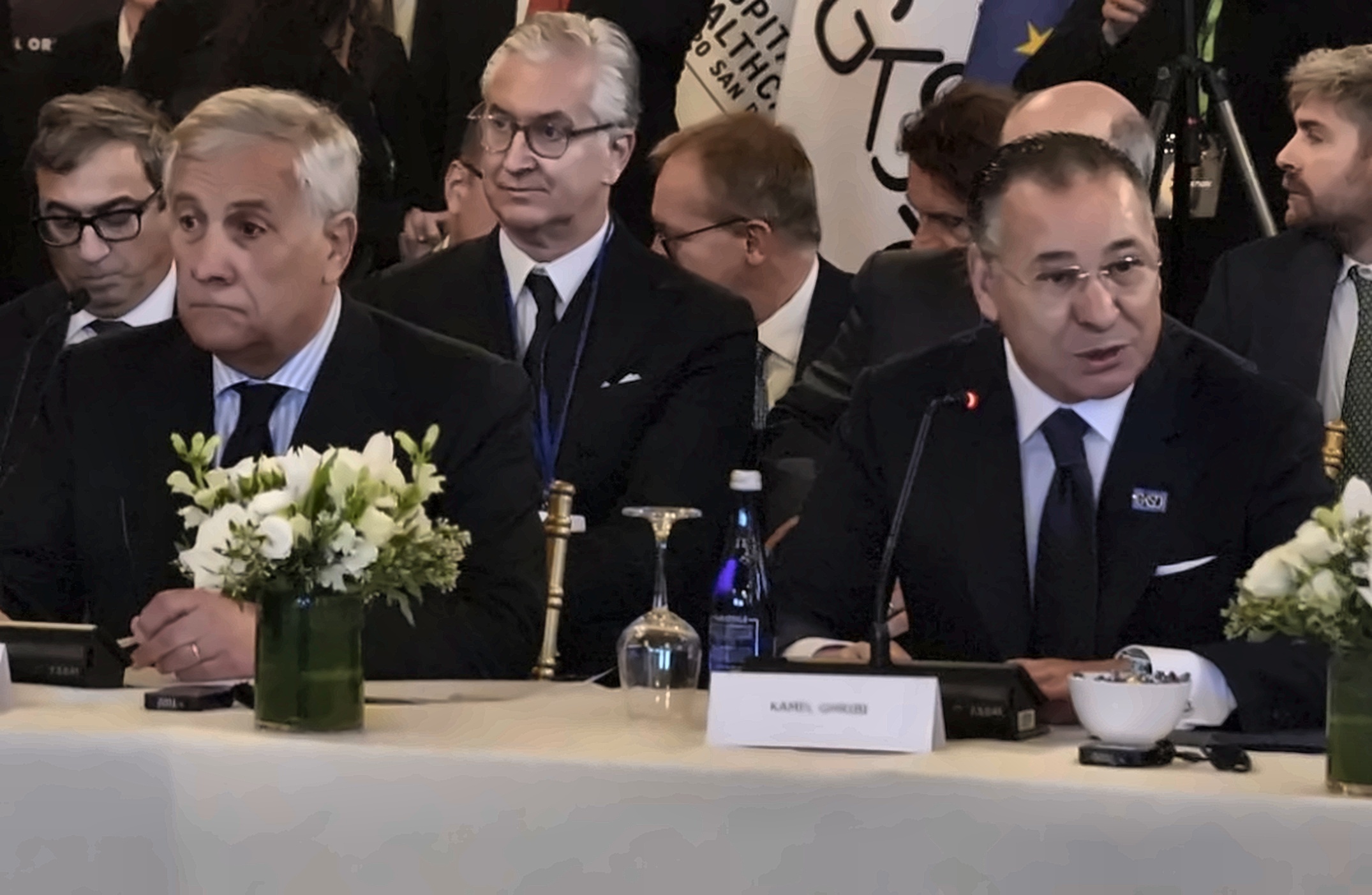
At the ECAM Council Summit in New York, Kamel Ghribi argued that this framing is already outdated.
Hosting the eighth ECAM Council Summit at The Plaza Hotel on September 24, 2026, alongside the 81st United Nations General Assembly, Ghribi presented the ECAM Charter on Africa, a nine-principle framework intended to guide a different kind of international relationship with the continent.
Its central idea is direct.
“Africa does not need charity; it needs partners. Africa is not the continent of tomorrow. It is the continent of today.”
For Ghribi, that distinction changes the entire conversation.
From Assistance to Partnership
The Charter positions African countries not as passive recipients of development support, but as active economic partners with their own priorities, markets, resources, industries and ambitions.
The framework emphasizes reciprocal relationships in which international capital, technology and expertise are combined with African leadership and local capacity.
Its goal is not simply to bring investment into Africa.
It is to ensure that a greater share of the value generated from African resources, talent and markets remains within the continent itself.
That means moving beyond a model based primarily on exporting raw materials.
The Charter instead prioritizes processing, manufacturing, industrialization and stronger local value chains.
For Ghribi, the ambition is clear: development becomes more sustainable when countries participate not only in supplying resources, but also in transforming them.
A Framework Built Around Nine Principles
The ECAM Charter on Africa sets out nine principles intended to shape the Council’s future initiatives.
They include local value creation, public-private partnerships, tangible projects, sustainability and lasting impact, African leadership and responsibility, transparency and measurability, innovation and expertise transfer, regional integration, and long-term partnerships.
Taken together, the principles reflect a move away from isolated initiatives.
The emphasis is instead on projects that can be measured, sustained and developed alongside African partners.
Local leadership is particularly important within the framework.
African institutions and governments are expected to help define priorities, design initiatives and lead their own development process.
This places responsibility on both sides of the partnership.
Leadership Must Come From Within
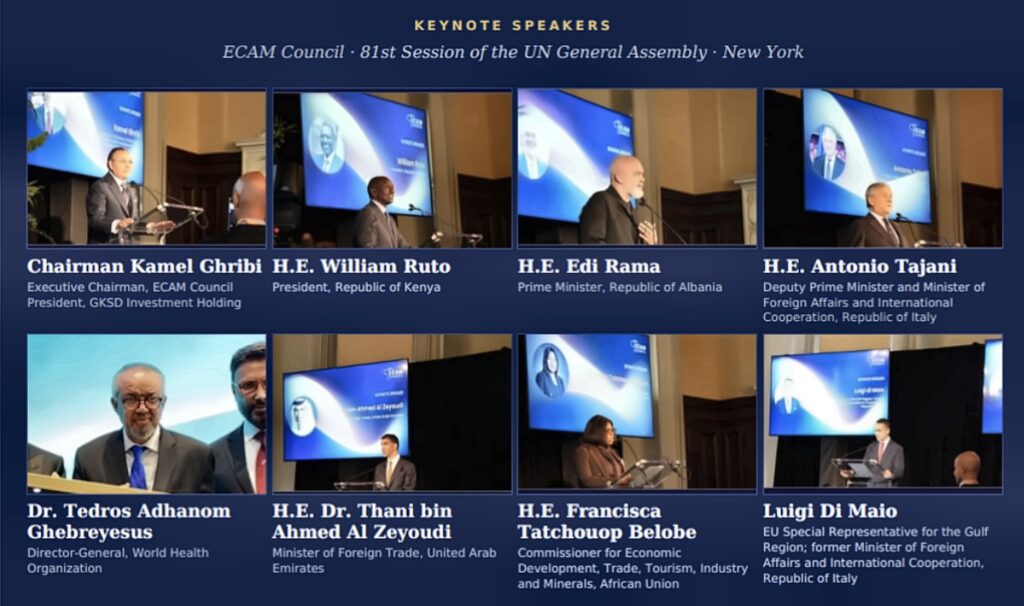
That point was reinforced by H.E. Francisca Tatchouop Belobe, Commissioner for Economic Development, Trade, Tourism, Industry and Minerals at the African Union Commission.
She described Africa’s transformation as a present reality, while also emphasizing the importance of strong institutions and domestic leadership.
The broader message was that international partnership is strongest when it is matched by credibility, coordination and responsibility within African countries themselves.
The Charter therefore does not present partnership as something delivered to Africa.
It presents it as something built together.
Connecting Africa, Europe and the Gulf
One of the most distinctive elements of the ECAM model is its cross-regional approach.
The Council brings together Europe, Africa and the Middle East, with a particular emphasis on combining different strengths across those regions. ECAM describes its broader mission as strengthening long-term cooperation in sectors including healthcare, infrastructure, education, research and training.
Under the Charter’s vision, Europe and the United States can contribute technology, knowledge and industrial expertise.
The Gulf can bring investment capacity and commercial networks.
African countries contribute markets, resources, talent and growing industrial potential.
The objective is not a traditional donor structure.
It is an economic corridor in which value moves in multiple directions.
Turning Principles Into Projects
For Ghribi, declarations alone are not enough.
The next stage is execution.
ECAM says it intends to translate the Charter into tangible projects developed with African governments, businesses, investors, financial institutions and international organizations. Areas of focus include healthcare, education, infrastructure, energy, research, training and broader industrial development.
The emphasis on measurable projects is intentional.
Capital must become infrastructure.
Technology must become capability.
Expertise must become local knowledge.
And partnership must produce results that remain after the initial investment has been made.
A High-Level Global Conversation
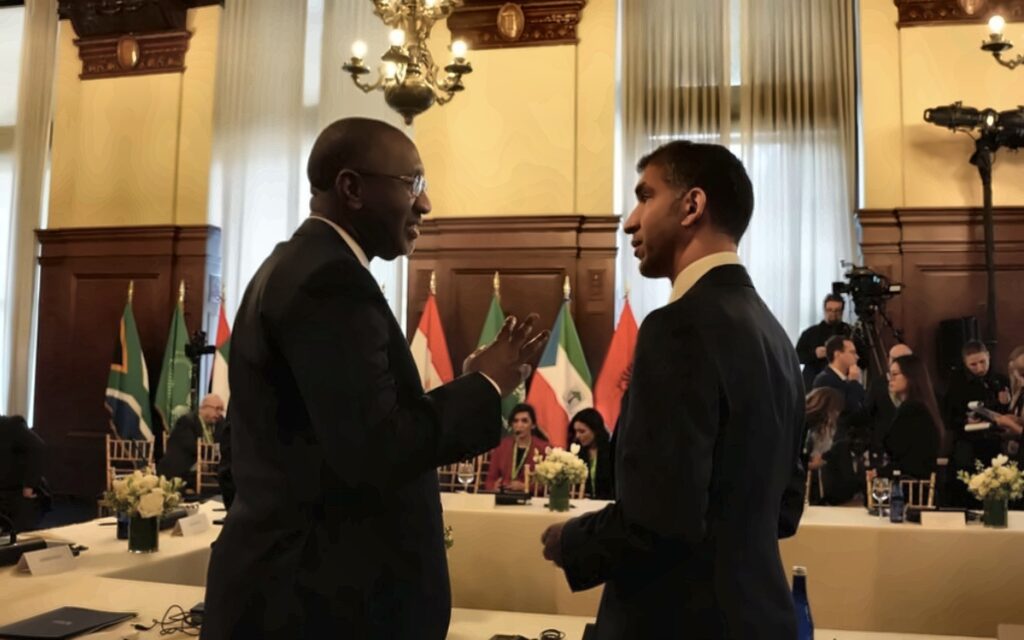
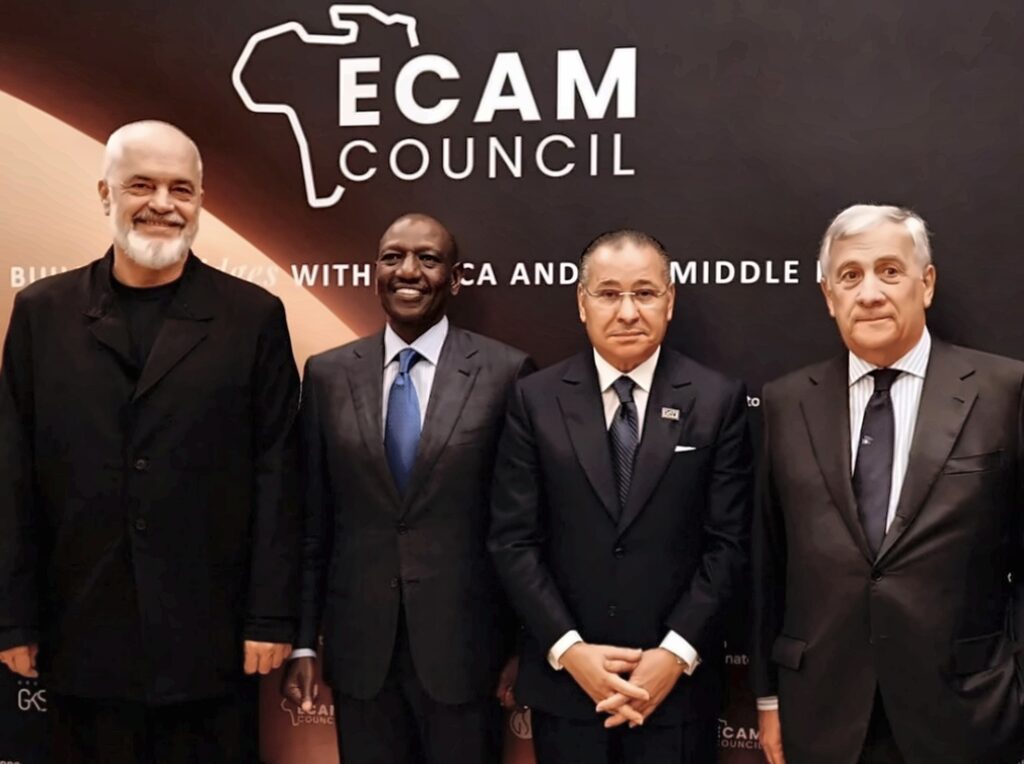
The New York summit brought together leaders from Africa, Europe, the Gulf and international institutions.
Participants included Kenyan President William Ruto, Albanian Prime Minister Edi Rama, Italian Deputy Prime Minister and Foreign Minister Antonio Tajani, UAE Minister of Foreign Trade Dr. Thani bin Ahmed Al Zeyoudi, Luigi Di Maio, European Union Special Representative for the Gulf, and Dr. Tedros Adhanom Ghebreyesus, Director-General of the World Health Organization.
The composition reflected the Charter’s ambition.
Its message was not limited to one government, one industry or one region.
It was about bringing together the institutions capable of turning international cooperation into practical economic outcomes.
Why Local Value Creation Matters
Among the nine principles, local value creation may be the most consequential.
Africa possesses significant natural resources, rapidly growing markets and one of the youngest populations in the world.
But resource wealth alone does not guarantee broad prosperity.
The Charter argues that stronger industrialization, local processing and integrated value chains are essential if economic growth is to translate into employment, technology transfer and productive capacity.
That distinction is fundamental.
Exporting raw materials creates one kind of economy.
Transforming those materials locally creates another.
For Ghribi, the second model offers a stronger foundation for long-term development.
From Prosperity to Stability
The Charter ultimately connects economic development with something larger.
Its underlying argument is that prosperity supports stability, and stability creates stronger conditions for lasting peace.
That is why Ghribi’s message reaches beyond investment.
The framework treats healthcare, infrastructure, industry, education and economic opportunity as interconnected parts of a more resilient future.
ECAM summarizes that progression simply:
From resources to value.
From value to prosperity.
From prosperity to stability.
From stability to peace.
A Different Conversation About Africa
The significance of the Charter may lie as much in its language as in its individual principles.
It rejects the idea that Africa should primarily be approached as a development problem.
Instead, it presents the continent as an increasingly important economic and strategic partner whose role in global markets, energy, supply chains, infrastructure and technology is already expanding.
For Kamel Ghribi, the opportunity is not about defining Africa’s future from outside.
It is about building with African partners who define that future themselves.
That may ultimately be the clearest message to emerge from New York.
Africa does not need to wait for tomorrow to matter.
It already does.